最近收到了很多大佬的讨论,我大概研究了一下。
相关概念
锁相关问题
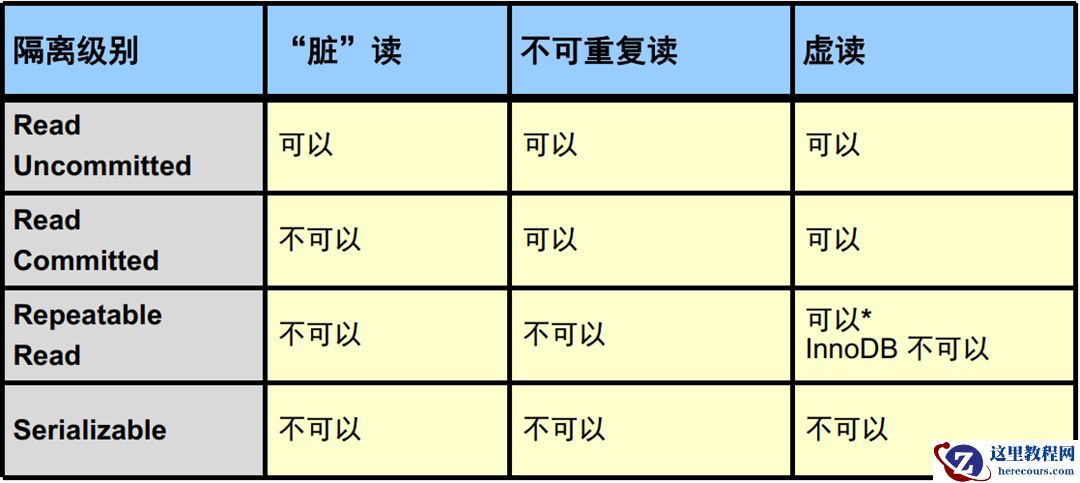
事务的隔离级别
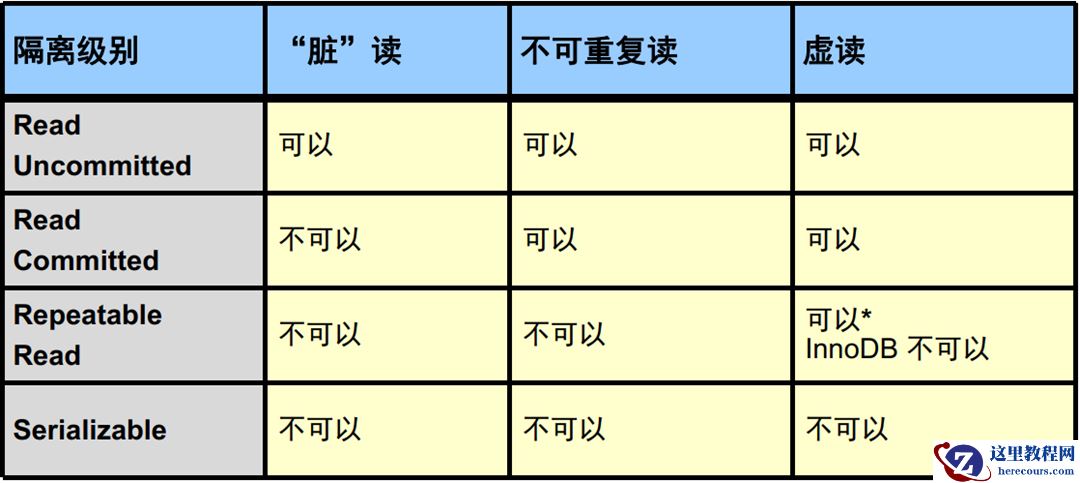
问题描述
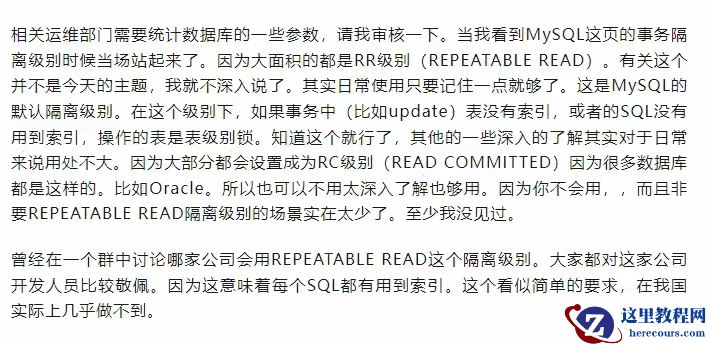
以下图均来自朋友圈截图,无断章取义,亦无恶意搬运,均为完整的意思表达,有疑问可以贴出来全文进行补充说明哈
实验
准备
下面我做几个实验,从各个角度来分析一下 RR 和锁
-
首先,先按照图中示例,创建一张表,并插入数据
create table t17 (id int auto_increment, a varchar(10), b varchar(10), c varchar(10), primary key(id) ) engine=INNODB default charset=utf8;insert into t17(id, a, b, c) values ('1','1','1','1'), ('2','2','2','2'), ('4','4','4','4'), ('6','6','6','4'); -
然后,我们再确认隔离级别
mysql> show variables like '%iso%';
+-----------------------+-----------------+| Variable_name         | Value           |
+-----------------------+-----------------+| transaction_isolation | REPEATABLE-READ |
+-----------------------+-----------------+1 row in set (0.00 sec)
实验一
事务 1:
mysql> begin;
Query OK, 0 rows affected (0.00 sec)
mysql> select * from t17;
+----+------+------+------+| id | a    | b    | c    |
+----+------+------+------+|  1 | 1    | 1    | 1    |
|  2 | 2    | 2    | 2    |
|  4 | 4    | 4    | 4    |
|  6 | 6    | 6    | 4    |
+----+------+------+------+4 rows in set (0.00 sec)
事务 2:
mysql> begin;
Query OK, 0 rows affected (0.00 sec)
mysql> select * from t17;
+----+------+------+------+| id | a    | b    | c    |
+----+------+------+------+|  1 | 1    | 1    | 1    |
|  2 | 2    | 2    | 2    |
|  4 | 4    | 4    | 4    |
|  6 | 6    | 6    | 4    |
+----+------+------+------+4 rows in set (0.00 sec)
事务 1:
mysql> update t17 set c=6 where a=6;
Query OK, 1 row affected (0.00 sec)
Rows matched: 1  Changed: 1  Warnings: 0
mysql> commit;
Query OK, 0 rows affected (0.00 sec)
mysql> select * from t17;
+----+------+------+------+| id | a    | b    | c    |
+----+------+------+------+|  1 | 1    | 1    | 1    |
|  2 | 2    | 2    | 2    |
|  4 | 4    | 4    | 4    |
|  6 | 6    | 6    | 6    |
+----+------+------+------+4 rows in set (0.00 sec)
事务 2:
mysql> select * from t17;
+----+------+------+------+| id | a    | b    | c    |
+----+------+------+------+|  1 | 1    | 1    | 1    |
|  2 | 2    | 2    | 2    |
|  4 | 4    | 4    | 4    |
|  6 | 6    | 6    | 4    |
+----+------+------+------+4 rows in set (0.00 sec)
结论 1:事务 1 的提交并不影响事务 2 的查询结果
疑问:事务 2 对数据做修改,会不会影响事务 1 的提交呢?我们继续实验
实验二
事务 2:
mysql> select * from t17;
+----+------+------+------+| id | a    | b    | c    |
+----+------+------+------+|  1 | 1    | 1    | 1    |
|  2 | 2    | 2    | 2    |
|  4 | 4    | 4    | 4    |
|  6 | 6    | 6    | 4    |
+----+------+------+------+4 rows in set (0.00 sec)
mysql> update t17 set a=8 where c=4;
Query OK, 1 row affected (0.00 sec)
Rows matched: 1  Changed: 1  Warnings: 0
mysql> select * from t17;
+----+------+------+------+| id | a    | b    | c    |
+----+------+------+------+|  1 | 1    | 1    | 1    |
|  2 | 2    | 2    | 2    |
|  4 | 8    | 4    | 4    |
|  6 | 6    | 6    | 4    |
+----+------+------+------+4 rows in set (0.00 sec)
结论 2:事务 2 的提交并没有影响 id=6 的数据,所以 MySQL 中,数据的查询应该是依赖 UNDO 做到的,当查询数据时,查到的内容是事务开启时的事务 ID 之前的数据,提交后,事务结束,查到的内容是事务 ID 之后的数据。而修改影响的是小于事务 id,且符合条件的数据,所以此时查到的 id=6 的数据 a 值依然是 6,而非 8。
疑问:那查询的内容是这个动作第一次执行之前的数据,还是事务开启,即 begin 之前的数据呢?
实验三
重新初始化数据
mysql> truncate table t17;
Query OK, 0 rows affected (7.38 sec)
mysql> insert into t17(id, a, b, c)
    -> values
    -> ('1','1','1','1'),
    -> ('2','2','2','2'),
    -> ('4','4','4','4'),
    -> ('6','6','6','4');
Query OK, 4 rows affected (0.00 sec)
Records: 4  Duplicates: 0  Warnings: 0
mysql> create table t1(id int);
Query OK, 0 rows affected (0.02 sec)
mysql> insert into t1 values (1),(2);
Query OK, 2 rows affected (0.01 sec)
Records: 2  Duplicates: 0  Warnings: 0
mysql> commit;
Query OK, 0 rows affected (0.00 sec)
事务 2:
mysql> begin;
Query OK, 0 rows affected (0.00 sec)
mysql> select * from t1;
+------+| id   |
+------+|    1 |
|    2 |
+------+2 rows in set (0.00 sec)
事务 1:
mysql> begin;
Query OK, 0 rows affected (0.00 sec)
mysql> update t17 set c=6 where a=6;
Query OK, 1 row affected (0.00 sec)
Rows matched: 1  Changed: 1  Warnings: 0
mysql> commit;
Query OK, 0 rows affected (0.00 sec)
mysql> select * from t17;
+----+------+------+------+| id | a    | b    | c    |
+----+------+------+------+|  1 | 1    | 1    | 1    |
|  2 | 2    | 2    | 2    |
|  4 | 4    | 4    | 4    |
|  6 | 6    | 6    | 6    |
+----+------+------+------+4 rows in set (0.00 sec)
事务 2:
mysql> select * from t17;
+----+------+------+------+| id | a    | b    | c    |
+----+------+------+------+|  1 | 1    | 1    | 1    |
|  2 | 2    | 2    | 2    |
|  4 | 4    | 4    | 4    |
|  6 | 6    | 6    | 4    |
+----+------+------+------+4 rows in set (0.00 sec)
总结:事务中的查询,查的是第一条与表相关的语句,这个动作触发之前的数据,而相同事务中,会记录此时的事务 ID,以此来保证所不允许的不可重复读和虚读
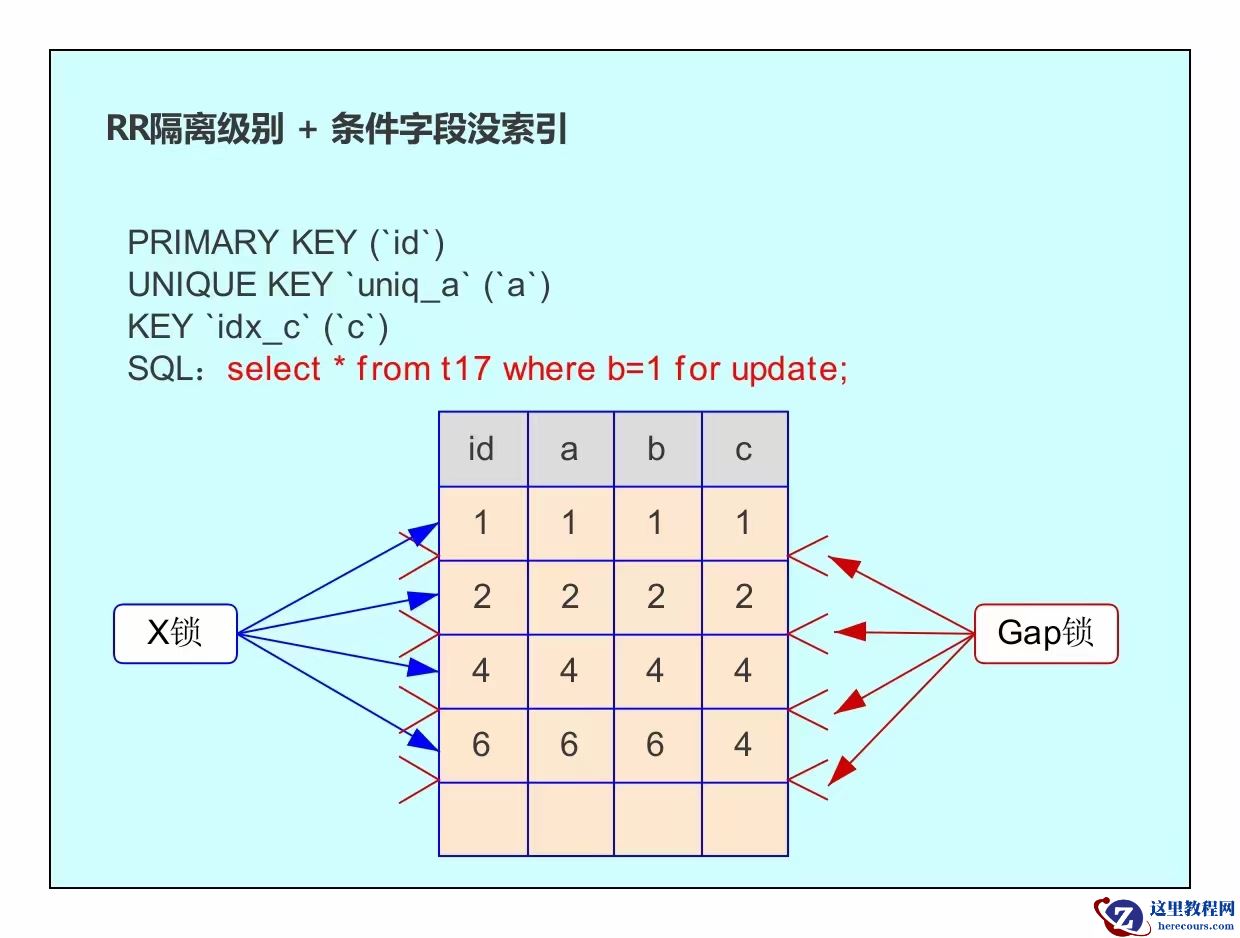
疑问:那图二中的 for update 是否可以操作呢?
实验四
重新初始化数据
mysql> truncate table t17;
Query OK, 0 rows affected (7.38 sec)
mysql> insert into t17(id, a, b, c)
    -> values
    -> ('1','1','1','1'),
    -> ('2','2','2','2'),
    -> ('4','4','4','4'),
    -> ('6','6','6','4');
Query OK, 4 rows affected (0.00 sec)
Records: 4  Duplicates: 0  Warnings: 0
事务 1:
mysql> begin;
Query OK, 0 rows affected (0.00 sec)
mysql> select * from t17 where a=1 for update;
+----+------+------+------+| id | a    | b    | c    |
+----+------+------+------+|  1 | 1    | 1    | 1    |
|  2 | 2    | 2    | 2    |
|  4 | 4    | 4    | 4    |
|  6 | 6    | 6    | 4    |
+----+------+------+------+4 rows in set (0.00 sec)
事务 2:
mysql> begin;
Query OK, 0 rows affected (0.00 sec)
mysql> update t17 set c=6 where a=6;
ERROR 1205 (HY000): Lock wait timeout exceeded; try restarting transaction
结论:for update 会造成锁表,不论 RR、还是 RC 环境
结语
好啦,蹭了一波热度,也进行了一些延伸,学到更多东西才是目的