在本指南中,我们将在示例的帮助下,看到如何将String转换为布尔值。
将String转换为布尔值时,如果字符串包含值"true"(大小写无关紧要),则转换后的布尔值为true,如果该字符串包含任何其他值,那么转换后的布尔值将为"false"。
使用Boolean.parseBoolean()方法将String转换为布尔
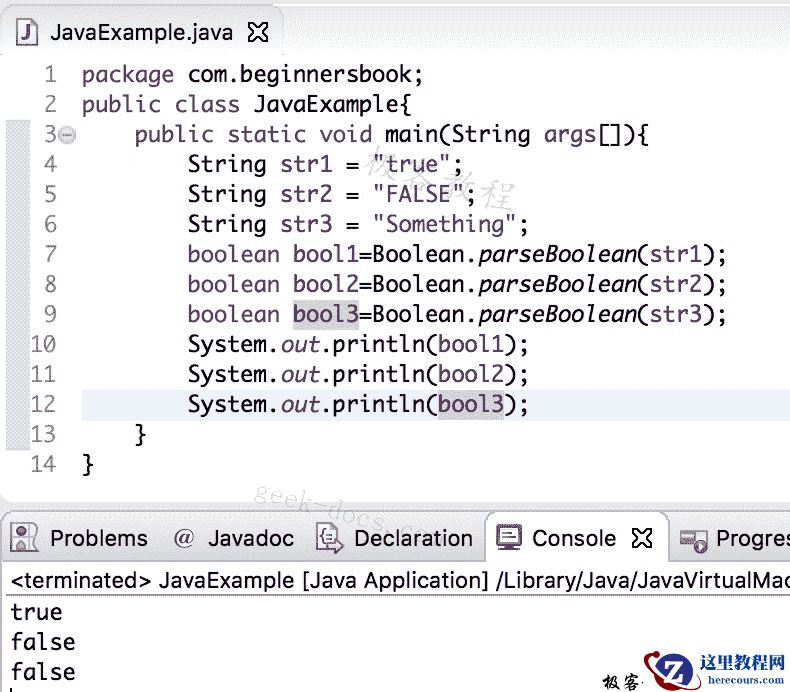
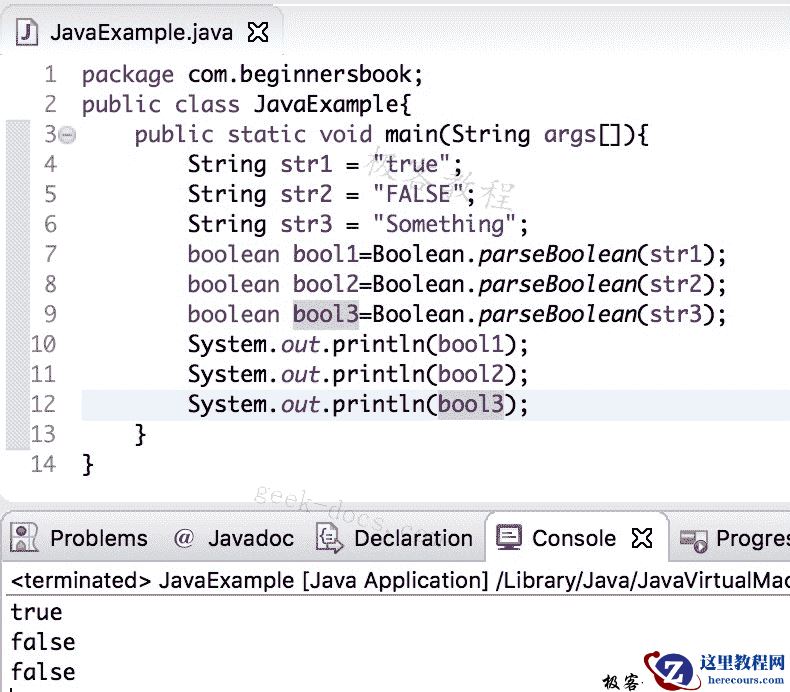
这里我们有三个字符串str1,str2和str3,我们使用Boolean.parseBoolean()方法将它们转换为布尔值,此方法接受String作为参数并返回布尔值true或false。如果字符串的值为"true"(在任何情况下为大写,小写或混合),则此方法返回true,否则返回false。
public class JavaExample{ public static void main(String args[]){ String str1 = "true"; String str2 = "FALSE"; String str3 = "Something"; boolean bool1=Boolean.parseBoolean(str1); boolean bool2=Boolean.parseBoolean(str2); boolean bool3=Boolean.parseBoolean(str3); System.out.println(bool1); System.out.println(bool2); System.out.println(bool3); }}输出:
使用Boolean.valueOf()的String到boolean转换
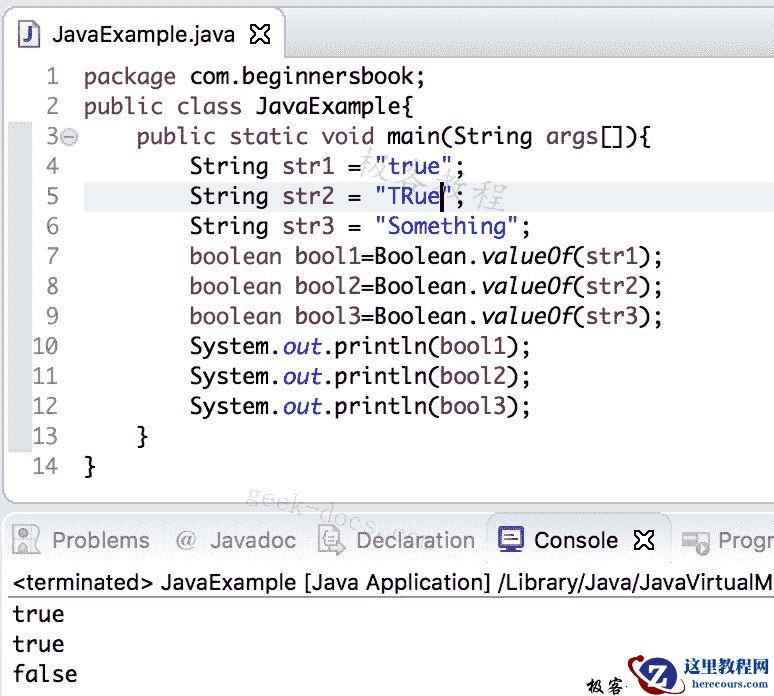
在这里,我们将看到另一种方法,我们可以使用它来进行字符串到布尔转换。与Boolean.parseBoolean()方法类似,Boolean.valueOf()方法接受字符串作为参数,并返回布尔值true或false。
public class JavaExample{ public static void main(String args[]){ String str1 = "true"; String str2 = "TRue"; String str3 = "Something"; boolean bool1=Boolean.valueOf(str1); boolean bool2=Boolean.valueOf(str2); boolean bool3=Boolean.valueOf(str3); System.out.println(bool1); System.out.println(bool2); System.out.println(bool3); }}输出: