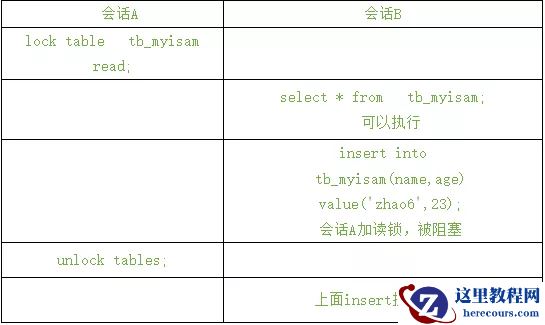
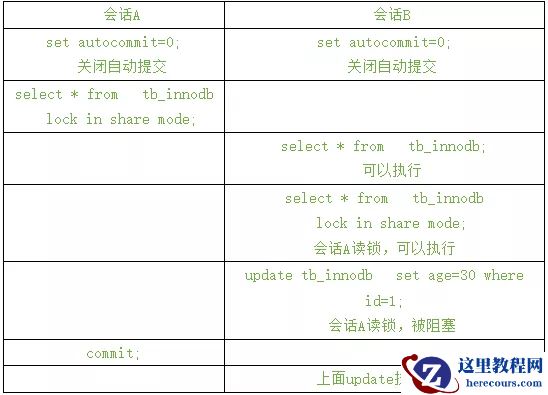
读锁(共享锁):针对同一份数据,多个读操作可以同时进行而不会互相影响。
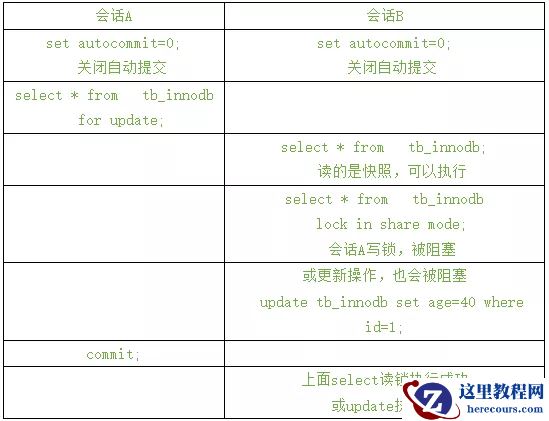
写锁(排它锁):当前操作没有完成之前,它会阻断其他的写操作或读操作。
表锁:操作时,会锁定整个表。开销小,加锁快;不会出现死锁;锁定力度大,发生锁冲突概率高,并发度最低。
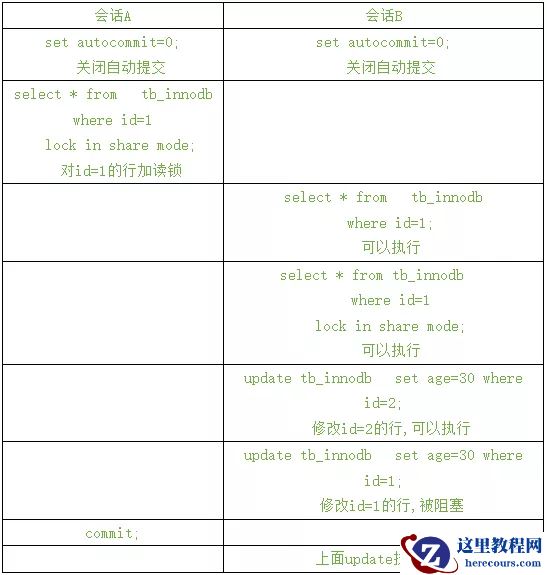
行锁:操作时,会锁定当前操作的表的某些行。开销大,加锁慢;会出现死锁;锁定粒度小,发生锁冲突的概率低,并发度高。
页锁:操作时,会锁定当前操作的表的某些页。开销和加锁速度介于表锁和行锁之间;会出现死锁;锁定粒度介于表锁和行锁之间,并发度一般。
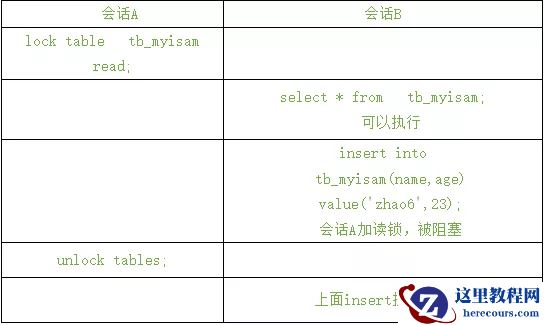
读锁:lock table table_name read;
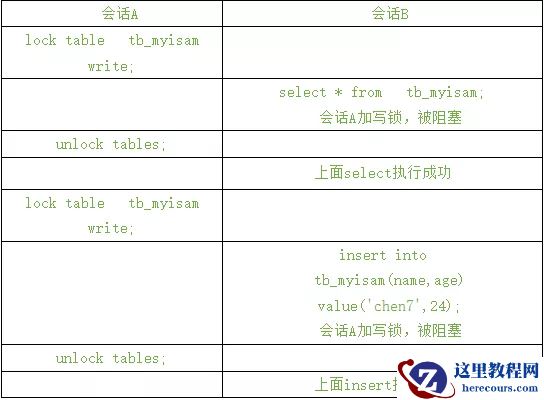
写锁:lock table table_name write;
解锁:unlock tables;
create

table tb_myisam(


id

INT AUTO_INCREMENT,


name

VARCHAR(

30),
age

INT,
PRIMARY

KEY(

id))

engine=myisam;


insert

into tb_myisam(

name,age)

value(

'zhang3',

20);


insert

into tb_myisam(

name,age)

value(

'li4',

21);


insert

into tb_myisam(

name,age)

value(

'wang5',

22);
3.2 InnoDB的表锁和行锁
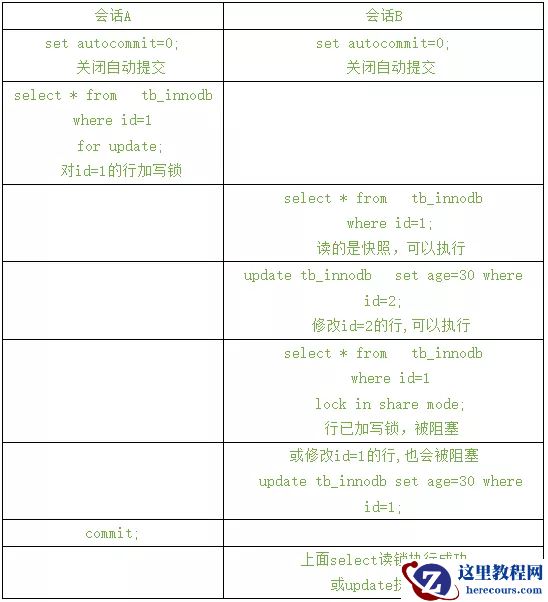
读锁:select * from table_name where ... lock in share mode;
写锁:select * from table_name where ... for update;
create table tb_innodb (id INT AUTO_INCREMENT,name VARCHAR(30),age INT,PRIMARY KEY(id)) engine=innodb; insert into tb_innodb(name,age) value('zhang3',20);insert into tb_innodb(name,age) value('li4',21);insert into tb_innodb(name,age) value('wang5',22);
3.2.4 演示InnoDB行的写锁: